

Optimizing factory reliability requires effective predictive maintenance strategies for factory assets. Learn practical, data-driven approaches.
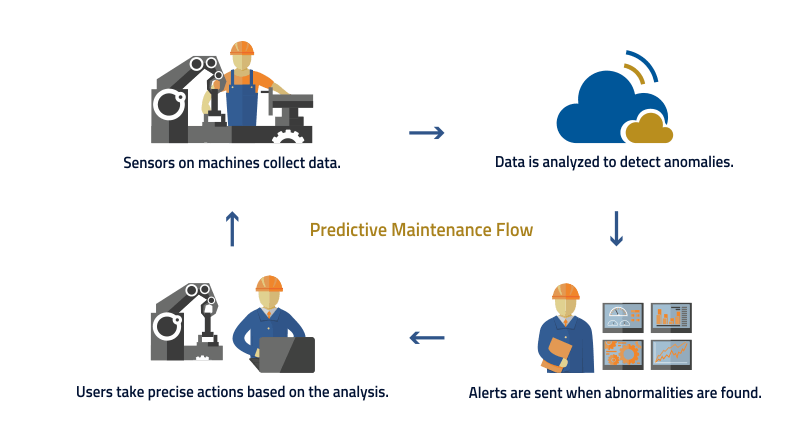
Effective maintenance is not just about fixing what breaks. In modern manufacturing, moving beyond reactive or even time-based preventive approaches is crucial for sustained uptime and profitability. From my experience on shop floors and in operations centers, the shift towards Predictive maintenance strategies for factory assets has fundamentally changed how we view machinery health and operational continuity. This proactive stance significantly reduces unscheduled downtime, extends asset lifespan, and ultimately drives better business outcomes.
Overview
- Predictive maintenance leverages real-time data to forecast equipment failures before they occur.
- Key technologies include vibration analysis, thermal imaging, acoustic monitoring, and oil analysis.
- Data analytics, often powered by machine learning, identifies patterns and anomalies indicating potential issues.
- Successful implementation requires a clear strategy, appropriate sensor deployment, and integration with existing systems.
- Benefits include reduced downtime, optimized maintenance costs, improved safety, and extended asset life.
- A cultural shift within the organization, emphasizing data literacy and proactive decision-making, is essential.
- Organizations in the US are increasingly adopting these strategies to maintain competitive advantages.
Implementing Predictive maintenance strategies for factory assets
Setting up effective Predictive maintenance strategies for factory assets begins with understanding your critical equipment. Not every asset requires the same level of monitoring. Start by identifying machines whose failure would cause significant production loss, safety risks, or high repair costs. This focused approach ensures resources are allocated wisely. Our initial steps often involve a thorough asset criticality assessment, categorizing equipment based on its impact on overall operations.
Once critical assets are identified, the next phase involves sensor deployment. We typically install a range of sensors to capture relevant data. Vibration sensors detect imbalances or bearing wear. Thermal cameras identify overheating components. Ultrasonic devices can pick up air leaks or early electrical issues. Oil analysis ports allow for regular sampling, revealing wear particles or contamination. Choosing the right sensor for the right asset is paramount; it directly impacts the quality of data collected. Integration of these sensors into a centralized data collection platform is key for consistent monitoring. This initial data collection forms the baseline for future analysis.
Key Technologies for Proactive Asset Management
Proactive asset management relies heavily on advanced sensor technologies and analytical tools. Vibration analysis remains a cornerstone. Portable or permanently mounted accelerometers detect subtle changes in machine vibration signatures. These changes often precede catastrophic failures, giving maintenance teams ample warning. Trained analysts interpret frequency spectra to pinpoint specific faults like misalignment, unbalance, or worn bearings. It’s a powerful tool that offers deep insights into rotating machinery.
Thermography, using infrared cameras, is another indispensable technique. Hot spots on electrical panels, motors, or bearings often indicate impending failure or inefficient operation. This non-invasive method allows for quick scans across a wide range of assets, identifying anomalies without disrupting production. Acoustic monitoring detects unusual sounds – like air leaks in pneumatic systems or failing electrical components – that are often imperceptible to the human ear. Lastly, regular oil analysis provides a chemical fingerprint of machine health, detecting wear metals, contaminants, or degradation of the lubricant itself. These technologies combine to create a comprehensive health picture.
Data-Driven Insights in Predictive maintenance strategies for factory assets
The real power of Predictive maintenance strategies for factory assets lies in converting raw sensor data into actionable insights. This is where advanced analytics and machine learning algorithms come into play. Data streams from various sensors are collected and processed, often in real-time. Machine learning models are trained on historical data, learning the normal operating parameters for each asset. When a new data point deviates significantly from this learned “normal,” the system flags it as an anomaly. This helps us move beyond simple thresholds, which can generate false positives or miss subtle issues.
For example, a slight increase in vibration amplitude might not trigger a basic alarm, but an AI model could detect a trend indicating bearing degradation over weeks. This proactive alert allows maintenance planners to schedule repairs during planned downtime, avoiding emergency shutdowns. Interpreting these insights requires a blend of data science and domain expertise. Maintenance technicians and engineers work alongside data analysts to validate alerts, understand root causes, and refine prediction models. The continuous feedback loop strengthens the system, making predictions more accurate over time. This collaborative approach minimizes false alarms and builds trust in the predictive system.
Building a Successful Framework for Predictive maintenance strategies for factory assets
Developing a robust framework for Predictive maintenance strategies for factory assets extends beyond just technology. It requires a significant cultural shift within the organization. Traditionally, maintenance departments are seen as cost centers, reacting to problems. Predictive maintenance positions them as strategic contributors, preventing costly failures and optimizing operational efficiency. This shift demands new skills, specifically in data interpretation and advanced diagnostics. Training programs are essential to upskill technicians, enabling them to understand sensor data, interact with software platforms, and apply analytical findings.
Integration with existing Computerized Maintenance Management Systems (CMMS) is critical. Predictive maintenance alerts should flow directly into the CMMS, automatically generating work orders or triggering specific tasks. This streamlines the planning and scheduling process, ensuring that identified issues are addressed promptly and efficiently. Measuring the Return on Investment (ROI) is also vital. We track key metrics such as reduced unplanned downtime, extended asset life, optimized spare parts inventory, and decreased maintenance costs. These tangible benefits help justify ongoing investment and demonstrate the value of a proactive, data-driven approach to asset management. Many facilities across the US have seen impressive gains by adopting this structured framework.


