
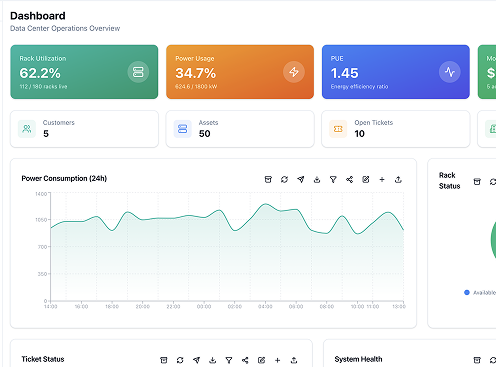
Gain insights into AI-Native Operational Dashboards. Learn real-world applications, data integration, and future trends impacting businesses in the US.

The operational landscape for businesses has fundamentally shifted. Gone are the days when static reports or merely descriptive analytics sufficed. Today, organizations demand proactive intelligence. From our direct experience, the true competitive edge emerges from systems that don’t just show what happened, but actively predict what will happen next and recommend actions. This is where AI-Native Operational Dashboards prove invaluable. They are more than just visualizations; they are intelligent command centers, built from the ground up to leverage artificial intelligence at every layer of operational monitoring and decision-making. We’ve seen firsthand how these systems empower teams to react faster and smarter.
Overview
- AI-Native Operational Dashboards integrate machine learning directly into their core, moving beyond traditional business intelligence.
- They provide predictive insights and prescriptive recommendations, enabling proactive operational management.
- Real-world deployment often involves merging diverse data sources, including IoT, CRM, and ERP systems.
- Key benefits include improved efficiency, reduced downtime, optimized resource allocation, and enhanced customer experiences.
- Successful implementation requires careful data governance, ethical AI considerations, and a focus on user adoption.
- These dashboards are becoming critical tools for maintaining agility and competitiveness across various industries in the US.
- They offer real-time visibility into complex processes, allowing for immediate intervention based on intelligent analysis.
Capturing Real-Time Value from AI-Driven Operations
In today’s fast-paced environment, the ability to act swiftly is paramount. Traditional operational dashboards often present historical data, making it difficult for teams to anticipate issues. Our work with clients has consistently shown that AI-driven operations offer a distinct advantage. These systems analyze live data streams, identifying patterns and anomalies that human operators might miss. For example, in manufacturing, we’ve implemented solutions that predict equipment failure hours, even days, before it occurs. This allows maintenance teams to schedule interventions proactively, avoiding costly production stoppages. The shift from reactive problem-solving to predictive maintenance significantly impacts bottom lines.
The true value lies in the actionable insights generated. It is not enough to simply flag a potential problem. The system must also suggest the most effective response. We’ve observed this in supply chain management, where AI models forecast demand fluctuations with greater accuracy. This leads to optimized inventory levels and reduced waste. Companies in the US are increasingly adopting these advanced analytical capabilities to refine their logistics and delivery networks. The operational efficiency gains are substantial, directly affecting profitability and customer satisfaction.
The Foundation of AI-Native Operational Dashboards
Building effective AI-Native Operational Dashboards starts with a robust data architecture. This means consolidating data from disparate sources, often in real-time. Think about the variety: transactional databases, sensor data from IoT devices, customer interaction logs, even external market indicators. These diverse datasets must be ingested, cleaned, and processed to feed the underlying AI models. From our perspective, the quality of this foundational data directly dictates the intelligence of the dashboard. Garbage in, garbage out, as the saying goes. Therefore, significant effort goes into data pipelines and integration strategies.
The “AI-native” aspect signifies that machine learning models are not mere add-ons. They are integral to the dashboard’s functionality. Predictive models forecast future states, while prescriptive models recommend specific actions. We’ve developed dashboards where AI algorithms dynamically adjust key performance indicators (KPIs) based on current operational context. For instance, a customer service dashboard might predict which customer issues are likely to escalate, prompting agents to prioritize those cases. This deep integration allows the dashboard to adapt and learn, continuously refining its insights over time without constant human reprogramming.
Practical Implementation: Best Practices for AI-Native Operational Dashboards
Implementing AI-Native Operational Dashboards requires more than just technical prowess; it demands a strategic approach. First, clearly define the operational problem you intend to solve. Without specific use cases, the effort can become an expensive data exercise with limited return. We always start with stakeholder interviews to map out pain points and desired outcomes. Second, prioritize data governance. Establishing clear rules for data collection, storage, and access is non-negotiable, especially with sensitive operational data. Data security and privacy are paramount. Third, user adoption is critical. Even the most sophisticated dashboard is useless if operators don’t trust or use it.
We advise developing dashboards with an intuitive user interface, presenting complex insights simply. Training and ongoing support are equally important. From an organizational perspective, fostering a data-driven culture is key. This means encouraging teams to question the data, validate model outputs, and provide feedback for continuous improvement. We’ve seen successful deployments involve cross-functional teams, breaking down silos between IT, operations, and business units. Ethical considerations are also vital. Ensuring fairness and transparency in AI models embedded in the dashboard helps build trust and acceptance among users.
Future-Proofing Decisions with AI-Native Operational Dashboards
The operational landscape is always evolving, and AI-Native Operational Dashboards are designed to evolve with it. Their inherent adaptability, powered by continuous learning AI models, allows businesses to remain agile. We’ve witnessed companies leverage these dashboards not just for current efficiency but also for strategic planning. By simulating various scenarios based on predictive analytics, leaders can make more informed decisions about resource allocation, market entry, or new product development. This strategic foresight is a significant differentiator. For instance, a retail chain might use such a dashboard to optimize store layouts or predict regional consumer trends, helping them stay ahead of competitors in the US market.
The integration of advanced AI techniques, such as reinforcement learning, is already pushing the boundaries further. These systems can learn through trial and error within simulated environments, optimizing complex processes autonomously. Imagine a logistics network where AI dynamically reroutes shipments to minimize delays and costs, continuously learning from real-time traffic and weather conditions. This move towards self-optimizing operations represents the next frontier. Ensuring these systems are built with scalability and interoperability in mind will be crucial for long-term success, allowing them to integrate with future technologies and changing business demands.

